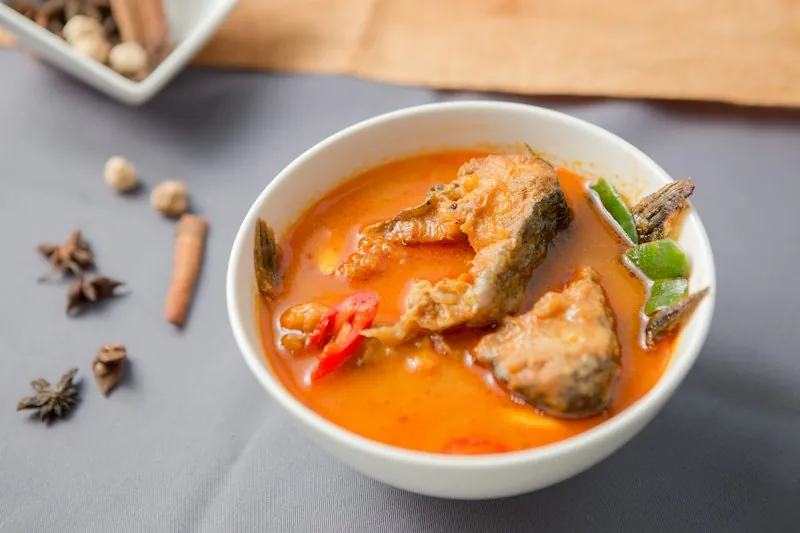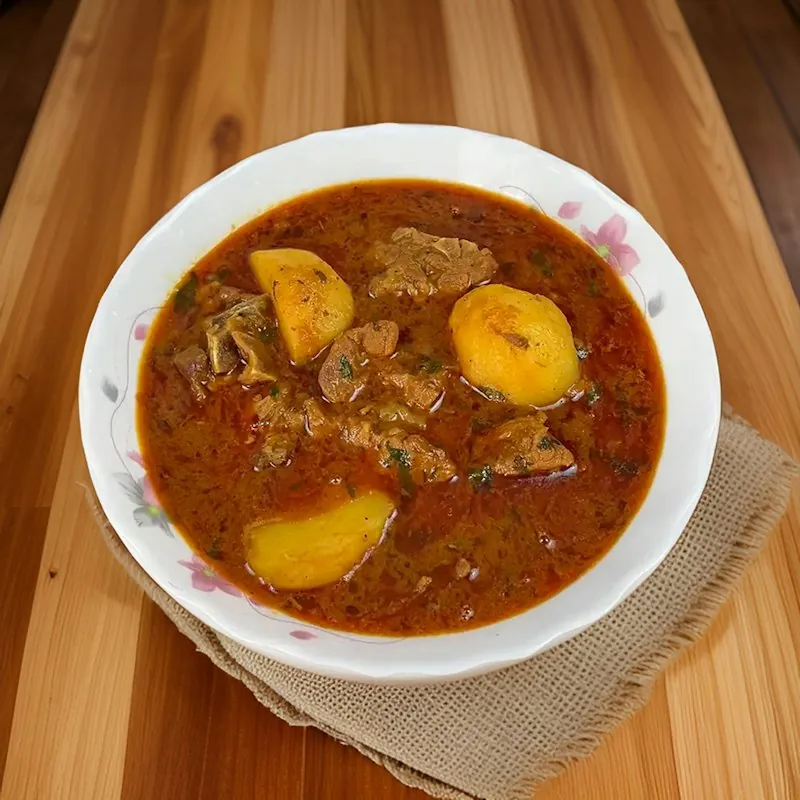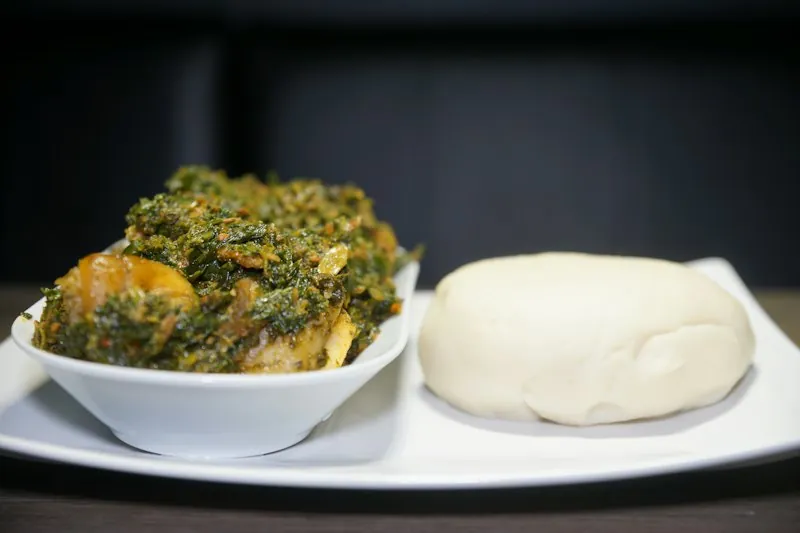
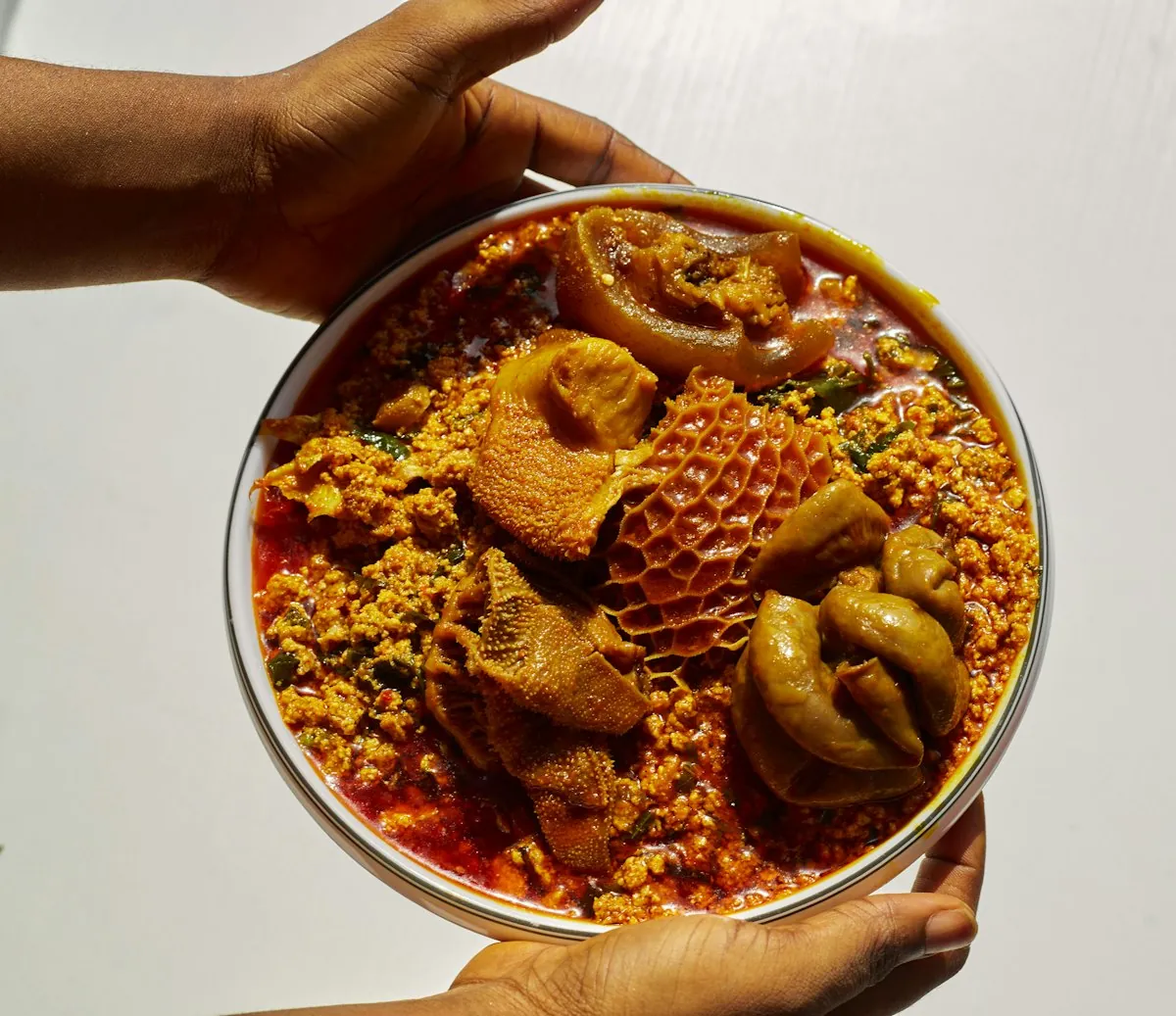
Egusi soup is one of the great pots of Nigerian cooking. Egusi are the dried, shelled seeds of a melon, and once they are ground they thicken the soup and give it a rich, nutty, savory flavor. Here they are simmered in palm oil and a pepper base with assorted meat, smoked fish and tender greens, until the soup turns thick, rich and softly curdled. It is the soup many families make for a big Sunday meal or when guests are coming, and its natural partner is a warm, stretchy mound of pounded yam.
This recipe serves six and takes about 50 minutes, if you get the meat on first and build the pepper base while it simmers. Tougher cuts such as tripe and cow skin need longer, so precook them or use a pressure cooker. The peppers, tomatoes and onion are blended and fried in palm oil until the oil separates from the base, and that step is where much of the flavor comes from. Look for ground egusi at African grocery stores, or buy shelled seeds and grind them yourself. You will also need one 2 lb bag of pounded yam flour, which makes about 7 servings, so a single bag covers dinner for six with a little to spare.
Everything here is written for a US kitchen, including where spinach or frozen greens can stand in for fresh ugu, and how to make pounded yam from flour in about 2 minutes at the stove, with no pounding. If you have never made it, our guide to how to make pounded yam with flour covers the technique in more detail.
Ingredients
For the meat and stock
- 1½ lb (680 g) assorted meat, such as beef, goat, tripe (shaki) or cow skin (ponmo), cut into bite-size pieces
- 1 piece stockfish (about 3 oz / 85 g), soaked in hot water until soft (optional)
- 1 medium onion, quartered
- 1 seasoning cube (such as Maggi or Onga)
- 1 teaspoon salt
- 3 cups (720 ml) water
For the pepper base
- ½ cup (120 ml) palm oil
- 2 large red bell peppers, seeded and chopped
- 2 plum (Roma) tomatoes, chopped
- 1 to 2 Scotch bonnet (habanero) peppers, to taste, or 1 teaspoon ground dried pepper
- 1 medium onion: half for blending, half finely chopped
For the soup
- 2 cups (about 250 g) ground egusi (melon seeds)
- ¼ cup (60 ml) water, for mixing the egusi
- 6 oz (170 g) smoked or dried fish, such as bonga fish or mud fish, cleaned and bones removed
- 2 tablespoons ground crayfish
- 1 tablespoon iru (fermented locust beans), optional
- 1 more seasoning cube
- About 2 cups (480 ml) of the meat stock, plus hot water as needed
- 8 oz (225 g) fresh ugu (fluted pumpkin) leaves, about 4 packed cups chopped; or use fresh spinach, or one 10 oz (280 g) package frozen chopped spinach, thawed and squeezed dry
- Salt, to taste
For the pounded yam
- 6 cups (about 1 lb 11 oz / 750 g) pounded yam flour, from one 2 lb (900 g) bag; the bag holds about 7 servings, so you will have about a cup left over
- 7½ to 9 cups (about 1.8 to 2.1 liters) water, for boiling: 1¼ to 1½ cups for every 1 cup of flour
- A little extra hot water from the kettle, for adjusting the texture
Method, step by step
- Put the meat, quartered onion, 1 seasoning cube, 1 teaspoon salt and 3 cups water in a large pot, bring to a boil, then cover and simmer until tender. Small pieces of beef or goat take about 30 minutes; tripe and cow skin take longer, so precook them or use a pressure cooker, and add softened stockfish now if using it.
- While the meat simmers, blend the bell peppers, tomatoes, Scotch bonnet and half of the second onion into a coarse puree, with no added water if your blender allows. Finely chop the other half of the onion, and pick over the smoked fish, removing skin and bones.
- Stir the ground egusi with ¼ cup water and a pinch of salt into a thick, crumbly paste that holds together when pressed. If it is too wet the egusi will melt into the soup instead of forming soft curds.
- Warm the palm oil in a large, wide pot over medium heat for 1 to 2 minutes, until it is liquid and fragrant but not smoking. Fry the chopped onion for 2 minutes, stir in the iru if using, then add the blended pepper and cook 8 to 10 minutes, stirring now and then, until the water has cooked off, the base has darkened and the oil rises to the top.
- Lower the heat to medium-low and drop the egusi paste over the pepper base in small spoonfuls, without stirring. Cover and cook for 8 to 10 minutes, until the egusi sets into soft curds and oil shows around the edges, then stir gently once.
- Add the meat with 2 cups of its stock, the smoked fish, crayfish and second seasoning cube, and stir gently. Cover and simmer for 10 minutes, adding a splash of hot stock or water if it gets too thick; the soup should be thick and spoonable, not watery.
- Fold in the chopped ugu or spinach and cook uncovered for 3 to 4 minutes (about 2 minutes for frozen spinach), until just wilted and still green. Taste, add salt or more pepper as needed, then turn off the heat and keep the pot covered.
- About 10 minutes before you want to eat, bring 7½ cups of water to a rolling boil in a large, heavy pot, then turn the heat down to low. That is the lower end of the ratio (1¼ cups water per cup of flour); the extra hot water covers you if the yam turns out stiff.
- Add the 6 cups of pounded yam flour a little at a time, stirring with a wooden spatula as it absorbs the water. Turn and fold the dough against the side of the pot for about a minute until smooth and stretchy, adding a splash of hot water if it feels too stiff.
- Scoop the pounded yam into 6 smooth balls (a damp bowl or wet hands keep it from sticking) and serve at once, hot, with a generous ladle of egusi soup on the side.
Tips for a better pot
- If your egusi is coarse or you are grinding whole shelled seeds at home, pulse them dry in a blender or spice grinder for a few seconds; adding water at this stage turns them to paste.
- Do not shortcut the palm oil step. The soup gets its color, flavor and richness from palm oil cooked until it separates from the pepper base, and there is no exact substitute, so look for red palm oil at African grocery stores.
- For big curds, leave the egusi alone for the first 8 to 10 minutes. For a smoother, more uniform soup, stir it in right away instead; many cooks have a strong preference, and both are traditional.
- Add stock gradually. It is easy to thin egusi soup but hard to thicken it, so start with about 2 cups and add a splash at a time.
- Cook the pounded yam last. It takes about 2 minutes and is best hot from the pot, so start the water only when the soup is nearly done.
- Short on pot space? Make the pounded yam in two batches of 3 cups flour with 3¾ to 4½ cups water each, and keep the first batch covered while you make the second.
Serving. Ladle the egusi into deep bowls, or bring the pot to the table, and give everyone a warm ball of pounded yam. Many people eat it with their fingers: pinch off a small piece of yam, press a hollow into it with your thumb, scoop up some soup and a piece of meat, and swallow it without much chewing. Egusi is filling, so start with modest portions of meat and let everyone add more, and pass extra hot pepper at the table for anyone who wants more heat. Keep the soup at a gentle simmer and the yam covered so both stay hot.
Leftovers and make-ahead. A few notes on planning ahead:
- Cool the soup quickly, then refrigerate it in a covered container and eat it within three to four days.
- Freeze the soup in single portions if you like; thaw overnight in the refrigerator.
- Reheat gently over low heat with a splash of water, stirring often.
- Make the pounded yam fresh, just before you eat. It takes only about 2 minutes and is best hot.
The pounded yam flour. This recipe uses one 2 lb bag of pounded yam flour, which costs $9.99 and works out to about $1.40 a plate. Our flour is made only from Benue yams that are peeled, parboiled, dried, milled fine and sifted, with nothing else added: no preservatives, no food coloring, no chemicals. Many instant "poundo" flours are blends of yam with other starches, so it is worth checking the label of whatever you buy, and pounded yam flour is not the same thing as elubo, the flour used for amala. If you cook these soups often, the 5 × 2 lb bundle ships free within the continental US, and you can subscribe and save 10% with a reminder every 4 weeks to reorder in one click, skip or cancel any time. A 10 lb bag also ships free and covers about 36 servings. Orders ship within 24 to 48 hours and usually arrive in 2 to 5 business days, and restaurants, caterers and stores can ask for trade pricing on the 40 lb case through the wholesale form.
Where to get the ingredients. The soup ingredients are coming to Afri Foods Basket soon, including palm oil, crayfish, dried pepper, stockfish, smoked fish such as bonga fish and mud fish, ugu leaf for the greens, and seasoning like Maggi cubes and Onga. Until they arrive, many of them can be found at African grocery stores. You can see the full list, with a Notify me option, in the coming soon section, and browse what is in stock today in the shop.
More soups to try. If this pot goes down well, cook pounded yam and efo riro for a thick, spinach-rich stew, pounded yam and ogbono soup for something silky, or pounded yam and okra soup when you need dinner on the table fast.
Frequently asked questions
How much pounded yam flour do I need for six people?
Plan on about 125 g, roughly 1 cup, of flour per person, so 6 cups (about 1 lb 11 oz) for six. One 2 lb bag covers about 7 servings, so you will have a little left over. Use 1¼ to 1½ cups of boiling water for every cup of flour, and add the flour gradually while stirring.
Can I use spinach instead of ugu leaves in egusi soup?
Yes. Fresh spinach is the easiest substitute in the US, and you add it in the last few minutes so it stays green. Frozen chopped spinach works too: thaw it and squeeze it very dry so it does not thin the soup. Water leaf and bitterleaf are other traditional choices if you can find them.
Why did my egusi melt into the soup instead of clumping?
Usually the paste was too wet or the pot was stirred too soon. Mix the ground egusi with just enough water to make a thick, crumbly paste, spoon it over the hot palm oil base, then cover and leave it undisturbed until it sets, about 8 to 10 minutes. Stir gently after that.
Can I make egusi soup ahead of time?
Yes. Cool it quickly, refrigerate it in a covered container and eat it within three to four days, or freeze it in portions. Reheat gently with a splash of water. Make the pounded yam fresh just before serving, because it takes only about 2 minutes and is best eaten hot.