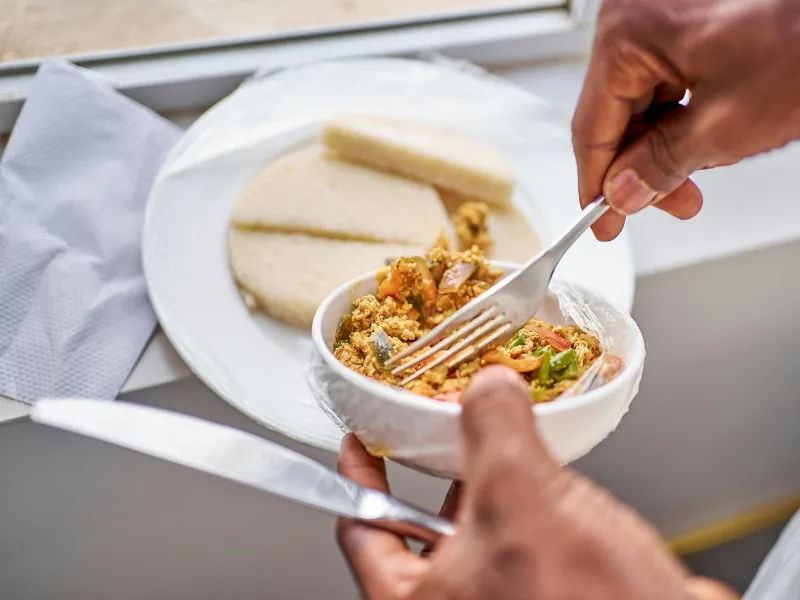
If you are wondering what to eat with pounded yam, the answer is almost any Nigerian soup or stew. Egusi, efo riro, ogbono, okra, edikang ikong, afang, oha, banga, bitterleaf soup, pepper soup, ayamase and everyday vegetable soup all pair beautifully. Pounded yam is mild, smooth and stretchy, so it works as a soft base that carries a rich, peppery, palm-oil-scented soup. Below are 12 classic pairings, how to choose between them, how much to cook and how to serve it all at home in the US.
Why pounded yam goes with almost every Nigerian soup
Pounded yam, called iyan in Yoruba, is a swallow: a smooth dough that you pinch off, roll into a small ball, dip into soup and eat. On its own it has a gentle, clean, slightly earthy flavor. That is exactly the point. The soup brings the heat, the salt, the smoky fish, the crayfish and the palm oil, and the pounded yam gives you something soft and neutral to carry all of it.
It also comes down to texture. A good soup is often thick, leafy, seedy or slippery, and a smooth ball of pounded yam is the ideal contrast. Because the dough is firm enough to hold its shape but soft enough to tear, it picks up soup without falling apart, and you can enjoy every spoonful of meat and fish along the way.
The best part for a busy cook is the timing. The soup is where the time goes. The pounded yam itself cooks in about 2 minutes when you start from flour, so you can have a proper swallow on the table as soon as the soup is ready. If you have never made it, our guide to how to make pounded yam with flour walks through every step.
What to eat with pounded yam: 12 soups and stews that pair perfectly
These are twelve of the most loved partners for pounded yam. They come from different parts of Nigeria and range from thick and rich to light and fiery, so there is something for every mood and every occasion.
1. Egusi soup
Egusi is made from ground melon seeds, simmered in palm oil with peppers, onions, crayfish, leafy greens such as spinach or pumpkin leaves (ugu), and meat, fish or both. It is nutty, rich and a little crumbly, with soft curds of seed throughout. It is one of the best-known partners for pounded yam, and its thick body clings to each ball. A firmer egusi sits on top of the dough; a looser one is better for scooping.
2. Efo riro
Efo riro is a Yoruba vegetable stew. Spinach or another leafy green is cooked down in a sauce of blended peppers and onions with palm oil, locust beans (iru), and assorted meat and fish. The result is savory, spicy and deeply flavored, with a wonderful aroma from the iru. The greens are tender rather than soupy, so a ball of pounded yam picks up plenty of leaf and sauce in one go.
3. Ogbono soup
Ogbono soup uses ground ogbono seeds (wild mango seeds) with palm oil, crayfish, dried fish and meat. What it is famous for is the draw: a silky, stretchy texture that coats the spoon. It is usually cooked gently over low heat, and the soft, stretchy texture goes very naturally with smooth pounded yam. It is a favorite when you want something comforting and deeply savory.
4. Okra soup
Okra soup is chopped or grated okra cooked briefly with pepper, crayfish and fish, seafood or meat, often with a little palm oil. Like ogbono, it has a slippery draw, but it is lighter and fresher, and it comes together quickly. That makes it a good midweek partner: a short cook time on the soup and 2 minutes for the pounded yam means dinner is on the table in a short while.
5. Edikang ikong
Edikang ikong is the celebrated vegetable soup of the Efik and Ibibio people of southeastern Nigeria (Cross River and Akwa Ibom states). It is packed with pumpkin leaves (ugu) and waterleaf, and made with palm oil, assorted meats, stockfish, crayfish and often periwinkles. It is traditionally cooked with very little added water, because the leaves release their own. It is dense, generous and a real occasion dish that goes well with a soft, smooth swallow.
6. Afang soup
Afang is another Efik and Ibibio classic, made from afang leaves (Gnetum africanum, known as okazi in Igbo), which are shredded very finely, often with waterleaf. It is cooked with palm oil, meat, stockfish, crayfish and often periwinkles. The flavor is earthy and rich, and the texture is thick and leafy. Pounded yam gives it a mild, smooth counterpart, and the pairing is a staple at celebrations and family meals.
7. Oha soup (ofe oha)
Oha soup is an Igbo favorite made with tender oha leaves, palm oil, meat, stockfish and crayfish, and lightly thickened with cocoyam paste or a traditional thickener such as ofor or achi. The leaves go in near the end so they stay soft and fragrant. The soup is aromatic and moderately thick, and it is a classic partner for pounded yam.
8. Banga soup (ofe akwu)
Banga is a palm fruit soup from the Niger Delta, and the Igbo version is called ofe akwu. Palm fruits are boiled and pounded, then the pulp is strained into a thick, orange-red extract and simmered with fish or meat and a distinctive blend of spices. The taste is savory, aromatic and rich. Banga is often served with other swallows or rice, but a soft ball of pounded yam holds up well against its rich, oily sauce.
9. Bitterleaf soup (ofe onugbu)
Bitterleaf soup is an Igbo dish made with bitterleaf (onugbu), which is washed and squeezed several times to tone down its bitterness. It is thickened with cocoyam paste or a similar thickener and cooked with palm oil, meat, stockfish and crayfish. A gentle bitter edge remains, which balances the richness of the palm oil. Mild pounded yam is a natural companion because it lets that flavor come through.
10. Nigerian pepper soup
Pepper soup is a thin, fragrant, fiery broth made with goat meat, chicken, assorted meats or catfish, and seasoned with pepper soup spices, hot peppers and often scent leaf. It is often served on its own as a starter or a warming bowl, especially on cold days. With a few small balls of pounded yam on the side it becomes a full meal, and you dunk each ball into the hot broth.
11. Ayamase (designer stew)
Ayamase, also called ofada stew and nicknamed designer stew, is a Yoruba green pepper stew. Green bell peppers and green chilies are blended and cooked in plenty of palm oil with locust beans (iru), onions and assorted meats such as beef, tripe and cow skin. The taste is bold, smoky and hot. It is best known with ofada rice, but the strong, rich sauce is also a great match for smooth pounded yam.
12. Everyday vegetable soup
Plain, generous vegetable soup is a staple in many Nigerian homes. Spinach or pumpkin leaves are cooked down in palm oil with peppers, onion, crayfish and whatever protein is at hand, such as smoked fish, beef, chicken or shrimp. It is the easiest of the twelve to adapt, which makes it a good first soup to cook with pounded yam. Make it as mild or as hot as your table likes.
Pairing chart at a glance
Use this quick chart to match a soup to the mood of the meal.
| Soup | Texture | Flavor | Good choice for |
|---|---|---|---|
| Egusi | Thick, nutty, crumbly | Rich and savory | Sunday dinner, guests |
| Efo riro | Leafy, saucy | Peppery, savory | A hearty family meal |
| Ogbono | Silky, stretchy draw | Earthy, savory | Comfort food |
| Okra | Slippery, light | Fresh, savory | Quick weeknights |
| Edikang ikong | Dense with leaves | Rich, savory | Special occasions |
| Afang | Thick, leafy | Earthy, rich | Celebrations |
| Oha | Lightly thickened | Aromatic | Family gatherings |
| Banga | Thick, palm fruit sauce | Rich, aromatic | A change from the usual |
| Bitterleaf | Thickened, leafy | Savory with a bitter edge | Fans of bold flavors |
| Pepper soup | Thin broth | Hot, fragrant | Cold days, starters |
| Ayamase | Thick pepper stew | Bold, smoky, hot | Spice lovers |
| Vegetable soup | Leafy | Mild to spicy | Beginners, everyday meals |
How to choose the right soup for the occasion
- Your first time cooking pounded yam. Start with everyday vegetable soup or egusi. Both are forgiving, and the pounded yam is the new skill you are learning.
- A quick weeknight. Okra soup or a simple vegetable soup comes together fast, and the pounded yam takes about 2 minutes.
- Guests and celebrations. Egusi, edikang ikong, afang and oha all feel like occasion dishes. Serve a big pot with plenty of meat and fish.
- A cold evening. Pepper soup with a few small balls of pounded yam is warming and easy to serve.
- Spice lovers. Ayamase and efo riro bring plenty of heat, and you can add more as you like.
- Something new. If you usually cook egusi, try banga, oha or bitterleaf soup, and see how a different soup changes the meal.
Variety is easy because the same pot of pounded yam works with any of them. You do not need a different recipe for the swallow, only a different soup. Elubo, the yam flour used for amala, cooks into a brown swallow with its own classic partners, so if you are curious about the difference read pounded yam flour vs poundo vs elubo.
How much pounded yam to cook for each soup
A good starting point is about 125 g of flour per person, roughly 1 cup. A 2 lb bag makes about 7 servings and a 10 lb bag about 36. If you are serving a thin soup such as pepper soup, or you expect big appetites, cook a little extra, because there is less in the bowl to fill people up. A thick, rich soup with plenty of meat and fish usually needs the regular amount.
For the full arithmetic, including how many pounds you need per month for your household, see our guide to how much pounded yam flour you need per person. If you are cooking for a crowd, remember that the soup has to stretch too: plan on a generous ladle or two of soup per person, and a little more if your guests like to dunk.
How to serve and eat pounded yam with soup
- Make the soup first. Most soups can be made ahead and reheated gently. Pounded yam should be cooked fresh, right before you eat.
- Cook the pounded yam. Use about 1¼ to 1½ cups of boiling water for each cup of flour. Add the flour gradually while stirring with a wooden spatula, then turn and fold the dough against the side of the pot for about a minute. If it is too stiff, add a splash of hot water. The steps are also summarized in our how-to section.
- Shape and serve. Shape the dough into smooth balls, one per person, and serve them hot in a bowl or on a plate beside the soup.
- Eat it the traditional way, or not. Traditionally, you wash your hands, pinch off a small piece with your right hand, roll it into a ball, press a dent in it with your thumb, scoop up some soup and swallow. Most people swallow small pieces rather than chewing at length. If you would rather use a fork or spoon, that is perfectly fine.
A few small touches make the meal feel complete: a glass of cold water, a small side of extra pepper for people who like more heat, and a spoon on the side for anyone who wants a little more soup.
What to buy: pounded yam flour now, soup ingredients soon
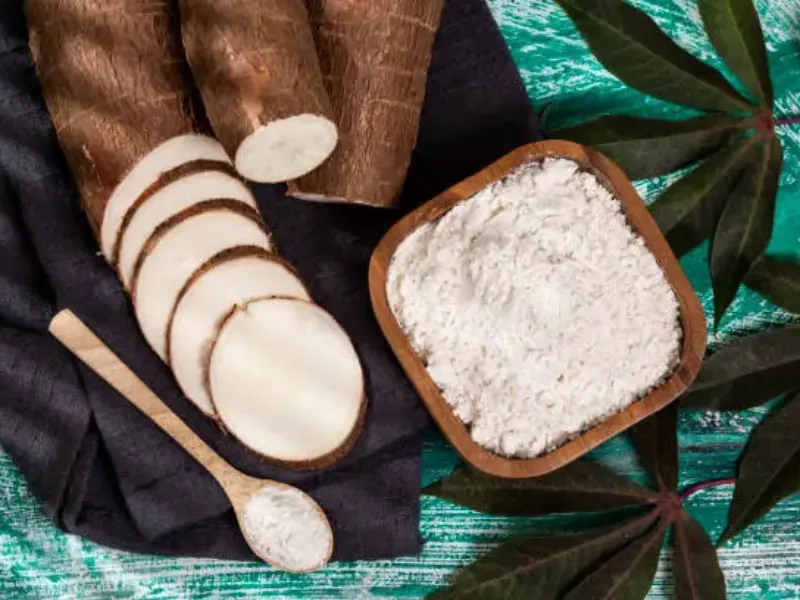
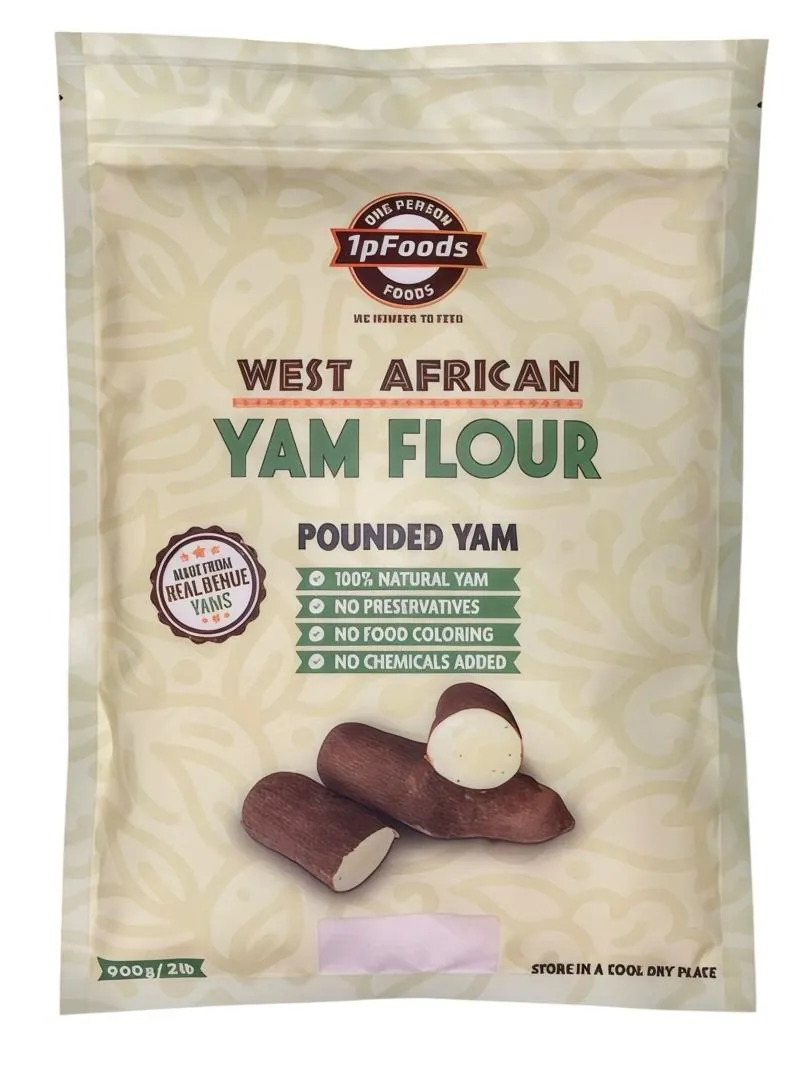
The swallow is the part you can order from us today. Our pounded yam flour is 100% yam, made only from Benue yams from Benue State, Nigeria. It is peeled, parboiled, dried, milled fine and sifted, with no preservatives, no food coloring and no chemicals added. It is packed in resealable, moisture-resistant bags with the best-before date printed on every bag, and it ships across the continental US.
- 2 lb bag (900 g), $9.99: about 7 servings, a good size for trying a new soup.
- 5 × 2 lb bundle, $49.95: five bags for regular cooks who like to keep a bag in reserve.
- 10 lb bag (4.5 kg), $49.95: about 36 servings for households that cook pounded yam every week.
Shipping is free within the continental US on orders of five or more 2 lb bags or any 10 lb bag. Orders ship within 24 to 48 hours and usually arrive in 2 to 5 business days. You can also subscribe and save 10% with a reminder every 4 weeks to reorder in one click, and skip or cancel at any time. See all the options on the shop page or compare pack sizes and pricing. To check the label details before you buy, read our buyer's guide to pounded yam flour.
The soup ingredients are on the way. 34 Nigerian pantry products, including dried fish and seafood, soup leaves, thickeners, spices, palm oil and garri, are coming in the next few months, and you can ask to be notified when each one arrives. Until then, you can pick up soup ingredients at a local African or international grocery store.
Start with the swallow, add your favorite soup
Order pounded yam flour that cooks in about 2 minutes, then pair it with any of the twelve soups above. Free shipping on five or more 2 lb bags or any 10 lb bag.
Frequently asked questions
Can you eat pounded yam without soup?
It is possible, but pounded yam is designed to be eaten with a soup or stew. Its mild flavor and smooth texture are meant to carry sauce, meat and fish. Without something saucy on the side, it tastes plain and can feel dry, so it is always best served with a flavorful soup.
What is the easiest soup to serve with pounded yam?
Everyday vegetable soup and egusi are the most forgiving for a beginner. Both can be made with ingredients you may already know, they are easy to adjust for heat, and they have enough body to go nicely with a ball of pounded yam. Okra soup is a quick alternative.
Can I eat pounded yam with stew instead of soup?
Yes. Any thick, saucy stew works. Ayamase and other pepper-and-palm-oil stews are popular with pounded yam, and a simple tomato and pepper stew with meat or fish also goes well. The idea is the same: something rich enough to coat the ball of dough.
Do you eat pounded yam with your hands or a spoon?
Traditionally it is eaten by hand: wash your hands, pinch off a piece with your right hand, roll it into a small ball, dip it in the soup and swallow. Plenty of people use a fork or spoon at home, especially with guests, and that is perfectly fine.
How much pounded yam should I make per person?
A good starting point is about 125 g of flour per person, roughly 1 cup, cooked with 1¼ to 1½ cups of boiling water. A 2 lb bag makes about 7 servings and a 10 lb bag about 36. Cook a little extra for big appetites or thin soups.