The short answer to pounded yam flour vs poundo is that they are usually two names for the same kind of product, an instant flour that cooks into white, stretchy pounded yam. What differs is what is inside the bag: pure yam or a blend. Elubo is a different thing altogether. It is made from raw dried yam and cooks into brown amala, not white iyan. This guide explains how the three differ, how to read an ingredient list, and how to be sure you are buying what you actually want to eat.
If you have ever stood in front of a shelf of bags labeled "yam flour," "poundo yam" and "elubo" and wondered whether they are interchangeable, you are not alone. The names overlap, the packaging is often similar, and the products really do cook differently. A little knowledge saves you from a pot of dough that is the wrong color, the wrong texture, or simply not what your soup was waiting for.
The short answer
- Pounded yam flour is yam that has been peeled, parboiled, dried, milled and sifted. It cooks in about 2 minutes into white, stretchy pounded yam (iyan).
- Poundo (often written "poundo yam") is the everyday name many people use for instant pounded yam flour. Many poundo flours are blends of yam with cassava, potato flakes or other starches, so the label matters.
- Elubo is yam flour made from raw dried yam. It cooks into brown amala, a different swallow with its own taste and texture.
In other words, the real question is not just "which name is on the bag" but "what is the flour made of, and how was it processed?"
What is iyan flour?
Iyan is the Yoruba word for pounded yam. "Iyan flour" is a common way of describing flour that makes pounded yam, so people searching for iyan flour are looking for the same product as pounded yam flour. Traditionally, iyan is made by boiling fresh yam and pounding it in a mortar with a pestle until it becomes a smooth, elastic dough. The flour skips the mortar. The yam is prepared ahead of time, so at home you only need boiling water and a wooden spatula.
Pounded yam flour vs poundo: same idea, different bags
"Poundo" is shorthand for instant pounded yam, and it has become a generic word. People say "poundo" or "poundo yam" the way they might say "instant rice." That is why comparing "pounded yam flour" with "poundo" is a little like comparing a category with a nickname for that category.
The real difference is in the ingredients. Pure pounded yam flour is only yam. Many instant poundo flours are made differently: the yam is often cut with cassava, potato flakes or other starches. We are not saying every blend is bad. Some people are happy with blended flours, and a blend can behave in its own way in the pot. But if you are buying pounded yam, it helps to know whether the bag contains yam alone, and the only reliable way to know is to check the label.
Why the difference can matter at the table
- Taste. Pure yam tastes like yam. Added starches can dilute that.
- Texture. A blend may feel different in the mouth and stretch differently from pure yam dough.
- Cooking behavior. Different starches take up water differently, so the water ratio that suits a pure flour may not suit a blend. Always follow the instructions on your bag.
- Value. It is worth knowing what you are paying for. If a bag is mostly something other than yam, the price should reflect that.
Is elubo the same as pounded yam flour?
No. Elubo is not the same as pounded yam flour, and this is the question we hear most. Both are yam flour, and both are milled from yam, so the confusion is natural. The difference is in the processing.
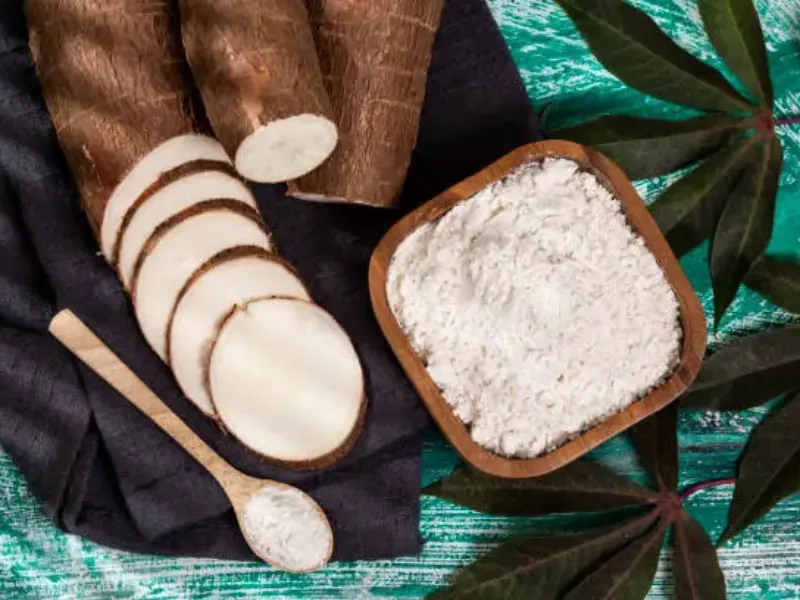
Elubo is made from raw dried yam. The yam is peeled, sliced, dried and milled without being cooked first. When you stir it into hot water, it cooks into amala, which is brown, softer and more pliable, with its own distinct flavor. Amala is a Yoruba swallow that is typically served with soups and stews such as ewedu, gbegiri and stew.
Pounded yam flour is made from yam that is parboiled before it is dried. The parboiling changes how the flour behaves. It cooks up white and stretchy, the way freshly pounded yam does. That is why you cannot make good iyan from elubo, and you cannot make amala from pounded yam flour. Each flour is designed for its own swallow.
Side-by-side comparison
| Item | Pounded yam flour (pure) | Poundo (instant flours) | Elubo |
|---|---|---|---|
| Made from | Yam only | Varies. Some are pure yam; many are blends with cassava, potato flakes or other starches | Raw dried yam |
| Yam preparation | Peeled, parboiled, dried, milled, sifted | Check the label | Dried raw, then milled |
| Cooks into | White, stretchy pounded yam (iyan) | A pounded-yam-style dough; color and texture depend on the blend | Brown amala |
| Color of the cooked dough | White | Usually pale, but it varies | Brown |
| Cooking time | About 2 minutes | Follow the pack | Follow the pack; it uses its own method |
| Classic partners | Egusi, efo riro, ogbono, okra, edikang ikong, afang, oha and more | The same soups as pounded yam | Ewedu, gbegiri and stew; other soups too |
| What to look for on the label | "Yam" and nothing else | Any ingredient beyond yam | Raw dried yam or yam flour |
How to read the ingredient list
The ingredient list is the fastest way to sort one flour from another. It takes half a minute, and it works on any brand in any store. Here is a simple routine:
- Find the ingredients. They are usually printed on the back or side of the bag. If there is no list, ask the seller before you buy.
- Count the ingredients. Pure pounded yam flour should list one thing: yam.
- Watch for other starches. Cassava, potato flakes, corn starch, or the general word "starch" all tell you the flour is a blend.
- Look for additives. Preservatives, colorings and flavorings do not belong in a bag of dried yam. Our flour has none of these.
- Check the processing words. Terms such as "parboiled" point to pounded yam flour. Terms such as "raw dried yam" point to elubo.
- Read the name and the picture together. Packaging images often show a finished plate of swallow. Trust the ingredient list more than the picture.
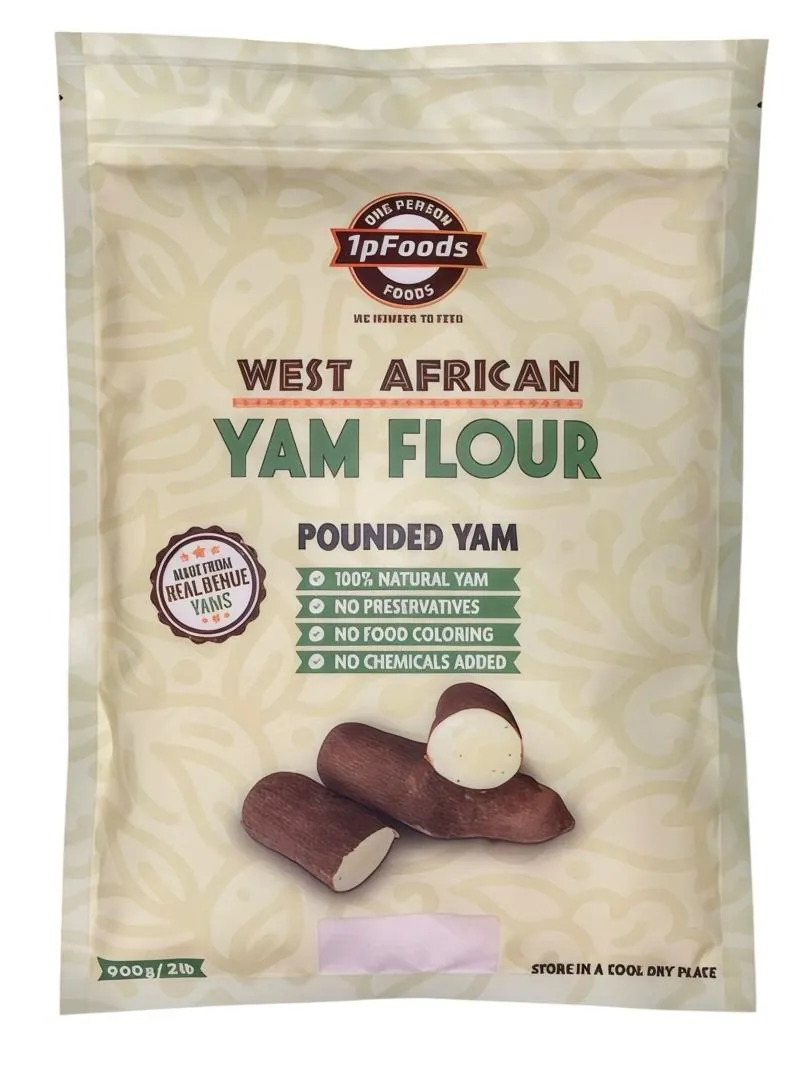
If the ingredient panel says only "yam" and the bag calls itself pounded yam flour, you are looking at the real thing. Ours is 100% yam, made only from Benue yams, with no preservatives, no food coloring and no chemicals added. You can find it on the shop page, and our buyer's guide to pounded yam flour has a longer checklist for comparing bags.
What each flour cooks into
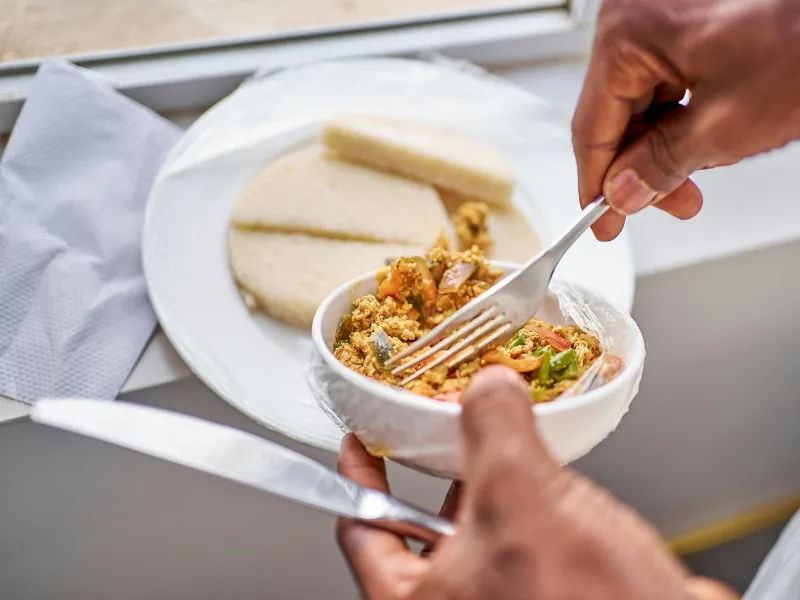
Pounded yam flour: white, smooth and stretchy
Add pounded yam flour to boiling water, turn and fold for a minute, and you get a smooth white dough that stretches when you pull it. It is neutral and mildly sweet in flavor, which is exactly why it suits strong, savory soups. The method is short. For every 1 cup of flour, use about 1¼ to 1½ cups of boiling water, add the flour gradually while stirring, and it is ready in about 2 minutes. The full method, with a ratio chart, is in our guide to how to make pounded yam with flour.
Elubo: brown, soft and earthy
Elubo cooks into amala, a brown swallow with a softer body and a deeper, earthier taste than white pounded yam. It has its own following, and many people alternate between the two depending on the soup and the mood. Amala is made with a different method from pounded yam, so follow the directions on the elubo pack rather than using pounded yam ratios. Amala can also be made from other flours, such as cassava or plantain flour, so check what the bag contains if that matters to you.
Blended poundo: it depends
Blended flours can produce a dough that looks and feels like pounded yam, but the result depends on the recipe inside the bag. If you buy one, read the cooking directions on that specific pack. The ratio for pure yam flour may not be the right one.
Which soups go with which swallow?
Both swallows are built to carry a soup, and the classic pairings are tradition rather than a rule. White pounded yam is the most flexible partner, and it goes with almost every Nigerian soup: egusi, efo riro, ogbono, okra, edikang ikong, afang, oha and pepper soup among them. Amala is closely associated with ewedu, gbegiri and stew, though it is also enjoyed with other soups. If you want twelve specific pairings for pounded yam, read our guide to what to eat with pounded yam.
The names people use: a quick glossary
- Iyan: the Yoruba word for pounded yam.
- Pounded yam flour: flour made from parboiled, dried, milled yam that cooks into pounded yam.
- Poundo or poundo yam: a popular everyday name for instant pounded yam flour. Check whether the bag is pure yam or a blend.
- Elubo: yam flour made from raw dried yam, used for amala.
- Amala: the brown swallow that elubo cooks into.
- Yam flour: a vague term that can mean either pounded yam flour or elubo. Always read the rest of the label.
That last entry causes more confusion than any other. "Yam flour" on its own does not tell you whether the yam was parboiled, so it does not tell you whether the flour makes white iyan or brown amala.
Which one should you buy?
Match the flour to the swallow you want to eat:
- You want white, stretchy pounded yam: buy pounded yam flour and check that the ingredient list is only yam.
- You want brown amala: that is elubo, which is a different product from ours.
- You are not sure: look for the words "parboiled" (pounded yam flour) or "raw dried yam" (elubo), and ask the seller if the label does not say.
What we sell is pounded yam flour: 100% yam, made only from Benue yams. It comes in a 2 lb bag (900 g, $9.99, about 7 servings), a 5 x 2 lb bundle ($49.95) and a 10 lb bag (4.5 kg, $49.95, about 36 servings). Shipping is free within the continental US on orders of five or more 2 lb bags or on any 10 lb bag. Restaurants, caterers and stores can ask about the 40 lb case through the wholesale form.
A quick way to test what you have
Suppose a bag has no label, or you are not sure what is in the pantry. Cook a small test portion: stir a little of the flour into boiling water as described above. If it turns white, smooth and stretchy within a couple of minutes, it is behaving like pounded yam flour. If it turns brown and cooks into a softer, earthier dough, it is elubo. Cooking a small test batch is a reliable, low-risk way to find out, and you only use a spoonful of flour.
Want pounded yam that is only yam?
Our flour is 100% yam from Benue, with no preservatives, no food coloring and no chemicals added. It cooks in about 2 minutes into white, stretchy pounded yam. Choose a 2 lb bag to try, or a 10 lb bag for free shipping. Subscribe and save 10% and get a reminder every 4 weeks to reorder in one click, with skip or cancel any time.
Frequently asked questions
Is elubo the same as pounded yam flour?
No. Elubo is made from raw dried yam and cooks into brown amala. Pounded yam flour is made from yam that is parboiled before drying, so it cooks white and stretchy. Both are yam flours, but each is made for a different swallow, and they are not interchangeable.
What is poundo yam?
"Poundo" or "poundo yam" is a common everyday name for instant pounded yam flour. Many poundo flours are blends of yam with cassava, potato flakes or other starches, so check the ingredient list. Pure pounded yam flour lists only one ingredient: yam.
Can I make pounded yam from elubo?
Not properly. Elubo is made from raw dried yam, so it cooks into brown amala rather than white, stretchy iyan. To make pounded yam, use flour made from parboiled yam, and cook it with about 1¼ to 1½ cups of boiling water per cup of flour.
How can I tell if pounded yam flour is pure?
Read the ingredient list. Pure pounded yam flour lists yam and nothing else. If you see cassava, potato flakes, other starches or additives, it is a blend. When the bag has no ingredient list, ask the seller before you buy.
Is pounded yam flour gluten-free?
Yam contains no gluten, and our flour is made only from yam. We do not call it certified gluten-free, though. If you have celiac disease or a serious allergy, check the allergen statement on the pack. For blended flours, read the full ingredient list carefully.