If you want to buy pounded yam flour online in the USA and end up with a swallow that cooks smooth, white and stretchy, check four things before you pay: the ingredient list (it should say yam and nothing else), where the yam comes from, how the flour was processed, and the best-before date on the bag. Pack size, price per plate and shipping then decide which bag fits your kitchen. This guide walks through each check in plain language.
Pounded yam, or iyan as it is called in Yoruba, is one of the great Nigerian swallows. Traditionally the yam is boiled and pounded in a mortar until it turns into a smooth, elastic dough. Pounded yam flour gives you the same result in about two minutes, without the mortar, the pestle or the arm workout. That convenience is exactly why the shelves (and the internet) are full of options, and why it pays to know what you are looking at.
What pounded yam flour actually is
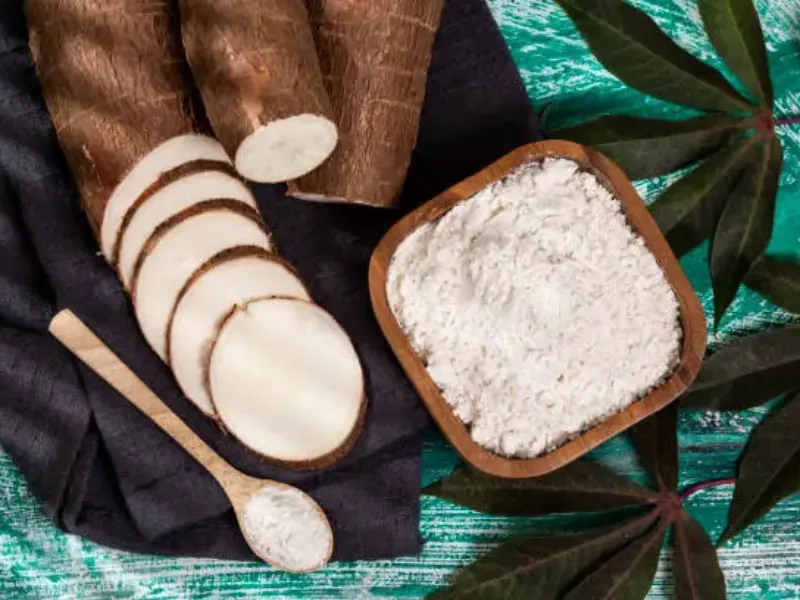
Good pounded yam flour is made from yam and only yam. The yam is peeled, parboiled (cooked part of the way through), dried, milled fine and sifted. Because the yam is parboiled before it is dried, the flour cooks up white and stretchy, the way freshly pounded yam does. That single processing step is the main reason pounded yam flour behaves differently from other yam flours on the market. If you want to see how it compares with poundo and with elubo, read our breakdown of pounded yam flour vs poundo vs elubo.
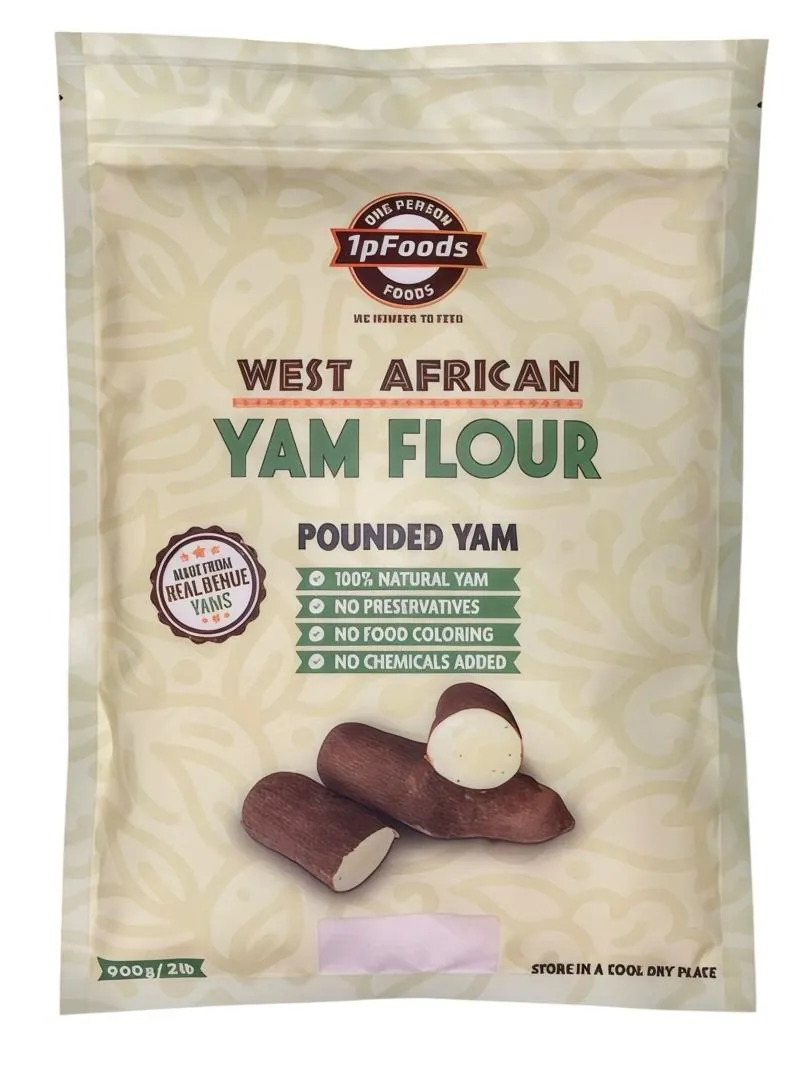
Our own 1pFoods pounded yam flour follows exactly that recipe: 100% yam, made only from Benue yams from Benue State, Nigeria, with no preservatives, no food coloring and no chemicals added. You can see it on the shop page.
Check 1: The ingredient list should be one word long
This is the most important check, and it takes five seconds. Turn the bag over and read the ingredients. For pure pounded yam flour, the list should say yam (or "yam flour") and stop there.
Many instant "poundo" flours on the market are blends. Often the yam is cut with cassava, potato flakes or other starches. That is not automatically a bad thing for every cook, but it should be your choice, not a surprise. If the label lists more than one ingredient, or gives a vague description instead of a list, you are probably not buying pure yam. When in doubt, check the label and choose accordingly.
Here is what to look for on the ingredient panel:
- One ingredient: yam. This is what pure pounded yam flour looks like on paper.
- No added starches: words like cassava, potato flakes, corn starch or "starch" mean the flour is a blend.
- No additives: preservatives, colorings and "flavor enhancers" have no place in a bag of flour that is just dried yam.
- A clear list: if there is no ingredient list at all, ask the seller before you buy.
Check 2: Where the yam comes from
Yam is a crop that varies a lot by variety and region, and that variation shows up in taste, color and texture. A seller who is proud of their flour will tell you where the yam was grown. Ours comes only from Benue yams, grown in Benue State, Nigeria. Benue is widely known in Nigeria for its yam farming, which is why so many cooks look for "Benue yam" on the label.
If a product page or bag says nothing about origin, that is a gap worth noticing. It does not prove the flour is poor, but you have less to go on. Ask yourself whether the seller has told you the things a careful buyer would want to know.
Check 3: Parboiled, dried, milled and sifted
The next question is how the yam was turned into flour. There are two broad routes. Yam can be dried raw and then milled, which gives you elubo, the flour used for brown amala. Or yam can be peeled, parboiled, dried and then milled, which gives you pounded yam flour. The parboiling is what makes the flour cook into a pale, stretchy dough instead of a brown one.
Look for wording that tells you the yam was parboiled. Then look for the finish: a fine, sifted flour mixes into hot water more evenly than a coarse one, which makes lumps easier to avoid. If you have ever fought a lumpy pot of pounded yam, the milling and sifting are often part of the story. Our step-by-step guide to making pounded yam with flour shows how to get a smooth result even when you are in a hurry.
Check 4: Packaging that protects the flour
Flour is dry, and dry things are easily spoiled by moisture. When you buy pounded yam flour online it travels through warehouses, trucks and porches, so packaging matters more than it does on a store shelf. Look for these features:
- Moisture-resistant material. The bag should keep humidity out.
- A resealable closure. You will not use a whole bag in one sitting, so being able to close it properly matters every single time you cook.
- An intact seal on arrival. A torn, damp or crushed bag is a reason to contact the seller.
Our bags are resealable and moisture-resistant. For everyday storage advice once the bag is open, see how to store pounded yam flour so it stays fresh.
Check 5: The best-before date
Every bag of food should carry a best-before date, and every bag of our flour does. When you buy pounded yam flour online, look for the date on the product page or, at the latest, on the bag when it arrives. A missing date is a red flag.
We will not put a general shelf-life number in this guide, because the only figure that matters is the one printed on your own bag. Treat the best-before date as your guide and store the flour as described on the pack.
Pounded yam flour USA: shipping and delivery
For most people in the United States, the local African grocery is either far away or does not always have the flour in stock. That is why online ordering has become the usual route for pounded yam flour in the USA. Before you check out anywhere, compare these four things:
- Where the seller ships. We ship across the continental United States.
- How quickly orders leave. Our orders ship within 24 to 48 hours.
- How long delivery usually takes. Orders usually arrive in 2 to 5 business days.
- When shipping is free. Ours is free within the continental US on orders of five or more 2 lb bags, or on any 10 lb bag.
The free-shipping thresholds are worth planning around. If you cook pounded yam every week, an order that qualifies for free shipping is almost always the sensible way to buy. If you are trying the flour for the first time, a single bag is a perfectly good start.
Comparing pack sizes and cost per plate
Different households eat different amounts, so pack size should follow how often you cook. The working figure is about 125 g of flour per person, which is roughly 1 cup. That gives about 7 servings from a 2 lb bag (900 g, because 900 divided by 125 is about 7) and about 36 servings from a 10 lb bag (4.5 kg, because 4,500 divided by 125 is 36).
| Pack | Weight | Price | Approximate servings | Free shipping? |
|---|---|---|---|---|
| 2 lb bag | 2 lb (900 g) | $9.99 | About 7 | Not on its own |
| 5 x 2 lb bundle | 10 lb in five bags | $49.95 | About 36 | Yes (five 2 lb bags) |
| 10 lb bag | 10 lb (4.5 kg) | $49.95 | About 36 | Yes (any 10 lb bag) |
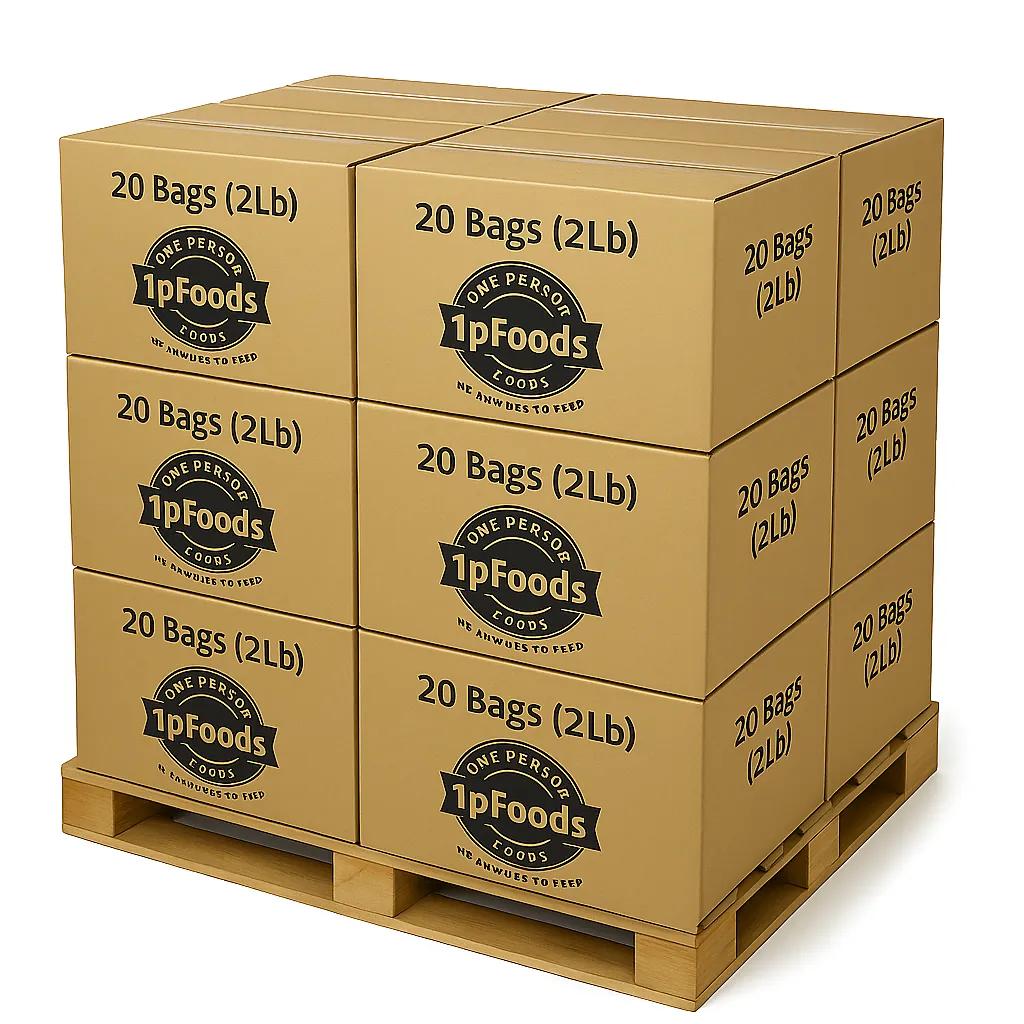
| 40 lb case | 20 x 2 lb bags | Trade price on request | Roughly 140 | Quoted with the trade price |
The arithmetic is simple. A 2 lb bag at $9.99 works out to about $5 a pound ($9.99 divided by 2 is $4.995), and a 10 lb bag at $49.95 also works out to about $5 a pound ($49.95 divided by 10 is $4.995). Across the packs, that comes to about $1.40 a plate. The larger packs are not cheaper per pound. What they change is convenience and shipping: they qualify for free shipping, and you reorder less often.
Which pack suits which kitchen?
- Trying it for the first time, or cooking once in a while: the 2 lb bag gives you about 7 servings for $9.99.
- A weekly pounded yam household: the 10 lb bag covers about 36 servings and ships free.
- You want the free shipping but prefer smaller bags: the 5 x 2 lb bundle gives you the same 10 lb as five separate resealable bags, so you open one at a time.
- A restaurant, caterer or shop: the 40 lb case of 20 bags is made for you. See our guide to buying pounded yam flour wholesale or use the wholesale form.
Not sure how much you need? Our guide to how much pounded yam flour per person shows the numbers for different household sizes.
Your buyer's checklist
Save this list and run through it whenever you compare bags of pounded yam flour:
- The ingredient list says yam and nothing else.
- The seller tells you where the yam is from.
- The yam is described as parboiled, dried, milled and sifted.
- The bag is resealable and moisture-resistant.
- A best-before date is printed on the bag.
- No preservatives, colorings or chemicals are listed.
- Shipping area, dispatch time and delivery time are clearly stated.
- You know the price per plate, not just the price per bag.
- There is a phone number or email address for questions.
What to check when the bag arrives
Once your order lands, take a minute to look over it before you put it away:
- The seal: the bag should be closed and undamaged, with no signs of damp.
- The date: find the best-before date and note it.
- The flour itself: good pounded yam flour is fine and dry, pale and creamy in color, with no hard lumps and no musty smell.
- A test batch: cook a small portion the same day. About 1 cup of flour with 1¼ to 1½ cups of boiling water takes about two minutes, and it is the fastest way to know you have bought the right flour.
Red flags to walk away from
- An ingredient list that is missing, vague or long.
- No best-before date.
- Claims that sound too good to be true, such as miracle results with no detail behind them.
- No contact details or no way to ask a question before you order.
- Photos of one product and a description of another.
What to cook once the flour arrives
The reason to buy pounded yam flour is the meal at the end of it. Pounded yam goes with a wide range of Nigerian soups, including egusi, efo riro, ogbono, okra and edikang ikong. If you are planning your first few dinners, our list of what to eat with pounded yam is a good place to start. We are also preparing a range of Nigerian pantry products, including dried fish, soup leaves, spices and palm oil, coming in the next few months. You can see the list and ask to be notified on the coming soon section.
Ready for pounded yam that is only yam?
Pure Benue yam flour, resealable bags, shipped from us within 24 to 48 hours across the continental US. Start with a 2 lb bag, or save on shipping with a 10 lb order. Subscribe and save 10% and get a reminder every 4 weeks to reorder in one click, with skip or cancel any time.
Frequently asked questions
Is poundo yam the same as pounded yam flour?
"Poundo" is a common everyday name for instant pounded yam flour, so the two words often describe the same idea. The difference is in what is in the bag. Many poundo products are blends, so always read the ingredient list. Ours is 100% yam, made only from Benue yams.
How many people does a 2 lb bag feed?
A 2 lb bag (900 g) feeds about 7 people at roughly 125 g, or about 1 cup, of flour per person. That is about $1.40 a plate. A 10 lb bag feeds about 36. If you are cooking for one or two, a 2 lb bag can cover several meals.
Is pounded yam flour gluten-free?
Yam contains no gluten, and our flour is made only from yam. We do not describe it as certified gluten-free, though. If you have celiac disease or a serious allergy, check the allergen statement on the pack before you eat it.
How long does delivery take?
Orders ship within 24 to 48 hours and usually arrive in 2 to 5 business days anywhere in the continental United States. Shipping is free on orders of five or more 2 lb bags, or on any 10 lb bag.
Can I try one bag before buying a big pack?
Yes. The 2 lb bag is $9.99 and makes about 7 servings, which is plenty to test the flour and your cooking. If you like it, move up to the 10 lb bag or the 5 x 2 lb bundle for free shipping, or set up a subscription for 10% off.