The short answer to how to store pounded yam flour is simple: keep it in a cool, dry cupboard, keep the bag sealed between uses, and keep water, steam and heat well away from it. That is nearly all there is to it. Pounded yam flour is a dry, single-ingredient product, and dry goods stay in good condition when they stay dry. The rest of this guide covers the details that matter in a real American kitchen: where to put the bag, how to reseal it, how to scoop, what to check if you are unsure, and what to do with cooked leftovers.
If you cook iyan only now and then, good storage is what makes the second, third and tenth bowl taste just like the first. If you cook it every week, it is what lets you buy a bigger bag with confidence. Either way, the habits below take a few seconds each and cost nothing.
How to store pounded yam flour: the short routine
If you only read one section, read this one. Six habits cover almost every situation:
- Store it cool. A pantry or a kitchen cupboard away from the stove, oven, dishwasher and sunny windows is ideal.
- Store it dry. Moisture is the main enemy of any flour. Avoid the cupboard under the sink and any shelf that gets steam.
- Keep it sealed. Press the bag closed after every use, squeezing out excess air first. If the bag is nearly empty, roll it down before you seal it.
- Scoop with something dry. A dry cup or spoon every time. Never a wet one, and never hold the open bag over a steaming pot.
- Never return cooked dough. Anything that has touched water or heat stays out of the bag for good.
- Check the best-before date. It is printed on every bag. Use older bags first.
The sections below explain the reasoning behind each habit, so you can adapt them to your own kitchen, whether you live in a small apartment in Houston or a big house in Minnesota.
Why a one-ingredient flour still needs careful storage
Our pounded yam flour is made from one ingredient only: yam, from Benue State in Nigeria. There are no preservatives, no coloring and no chemicals added. The yams are peeled, parboiled, dried, milled fine and sifted. That short, clean ingredient list is exactly what most cooks want, and it also explains why storage matters. A flour with nothing added has nothing else in it to look after itself, so the way you keep it is the main thing that protects it once the bag is in your home.
Two things work against any dry flour in a home kitchen. The first is water, whether as a splash, as steam from the stove or as humidity in the air. The second is time, because a bag that is opened, half used and left loosely closed for weeks is exposed again and again. Everything in this guide is about limiting both. Fortunately, the bag itself does much of the work: our flour comes in resealable, moisture-resistant bags, so the job is to use that design properly rather than fight it.
The best place in your kitchen (and the worst)
Think about where heat and water actually travel in your kitchen, because that is where the flour should not be.
Good places
- A pantry shelf or a closed cupboard on an interior wall.
- A lower cupboard away from the range, especially one that stays at a steady temperature.
- A cool, dry storeroom or utility cupboard, provided it does not sweat in summer.
Places to avoid
- Above or beside the stove. Rising heat and cooking steam are the fastest ways to compromise a dry product.
- The cupboard under the sink. Even a tiny, slow leak or condensation on pipes raises humidity around the bag.
- On top of the refrigerator. The motor gives off warmth, and that warmth is constant.
- In direct sunlight. A bag left on a sunny counter warms up and can sweat on the inside.
- Next to the dishwasher. Steam escapes when the door opens at the end of a cycle.
- A humid garage or basement. Big swings in temperature and damp air are exactly what you want to avoid.
What about the refrigerator or freezer? For everyday use you do not need either; a cool, dry cupboard is what the flour wants. A cold bag brought out into a warm, humid kitchen can also collect condensation, which is the opposite of what you are trying to achieve.
Keeping the bag sealed: bags, zippers and containers
Use the resealable closure properly
The resealable closure only works if it is clean. After scooping, run a finger along the track and wipe away any flour dust, then press it shut from one end to the other and listen for it to seal. A few grains caught in the track are the usual reason a zipper does not close all the way. It also helps to press the air out of the bag gently before you seal it, because there is less trapped humid air to sit against the flour.
Decant into an airtight container if you prefer
Many cooks like to pour the flour into a clean, completely dry, airtight container with a tight lid. It is neat, it stacks well, and you can see how much is left. If you do this:
- Wash the container, then dry it fully. Not nearly dry: fully dry.
- Keep the empty bag, or at least cut out the best-before date, so you can still see it. Writing it on the lid with a marker works well.
- Do not pour a new bag on top of the old flour. Finish the container, empty it, and start fresh, so the older flour is always used first.
Keep the flour away from strong smells
Dry flours can pick up the aroma of what they are stored next to. Keep pounded yam flour on a shelf separate from strong-smelling items such as open spices, dried fish or scented cleaning products. Dried fish and spices are coming to the store in the next few months (see what is coming soon), and when they arrive you will want a separate container for each of them anyway.
Scooping and measuring without letting moisture in
The most common way moisture gets into a flour is not through the bag. It is through the cup. A cup with a few drops of water on it, dipped into the bag, leaves damp flour at the top of the pile, and that little patch can form a hard clump within days.
- Use a dry measuring cup or a dry spoon every single time.
- Measure over a bowl or your work surface, not over the pot. Steam rising from a pot of boiling water reaches the flour in the bag if you are holding it right above.
- Pour the flour you need into a bowl first, then close the bag, then start cooking. If you have ever left an open bag next to a boiling pot while you stirred, this is the change to make.
- Do not tap a wet spatula against the bag or dip it in to check the level.
As a reminder of what you are measuring for, our flour is about 125 g, roughly 1 cup, per person, with about 1¼ to 1½ cups of boiling water for every 1 cup of flour. The full method, including how to add the flour gradually and how to fix a lumpy pot, is in our guide to how to make pounded yam with flour. If you are working out how much to measure for a crowd, use how much pounded yam flour per person as your quick reference.
Does pounded yam flour go bad? Signs to check
Yes, like any food, it can. A dry flour does not spoil overnight, but if it gets damp, sits somewhere warm, or is invaded by pantry pests, it can lose quality and eventually become unusable. The good news is that these problems are easy to spot. Before you cook from a bag you have had a while, take five seconds to look and smell.
| What you notice | What it usually means | What to do |
|---|---|---|
| A faint, clean yam aroma and an even, pale color | Normal. This is how a well-kept bag should look and smell. | Go ahead and cook. |
| Small soft lumps that break into powder when pressed with a finger | The flour has settled or compacted a little in the bag, especially after shipping. | Shake the bag, or push the flour through a sieve, then cook as normal. |
| Hard clumps that stay stuck together, or a damp feel | Moisture has reached the flour. | Do not use the affected flour. Check the seal and the shelf, then use a fresh bag. |
| A musty, sour or otherwise unpleasant smell | Damp, or the flour has been stored badly. | Do not use it. |
| Visible mold, dark or colored spots, or a fuzzy patch | Moisture has caused mold to grow. | Throw the bag away. Do not try to scoop around it. |
| Tiny insects, webbing or tiny holes in the bag | Pantry pests have got in. | Throw the bag away and check nearby dry goods. |
The rule of thumb for any food is the same here: if something looks, feels or smells wrong, do not cook it. A single bag is a small thing to replace, and it is not worth serving something you are unsure about.
A quick word about color
Pounded yam flour is a pale, off-white to cream powder, and there can be slight variation from batch to batch, just as there is with any product made from a natural root. A small difference in shade is not a warning sign on its own. Spots, patches, a change in smell, or a change in feel are the things to look for.
Reading the best-before date
Every bag of our pounded yam flour carries a best-before date printed on it. That date is your guide, and it is worth building one small habit around it: when you bring a new bag home, look at the date and put the bag behind any older ones. When you reach for flour, take the one with the earliest date.
A best-before date is about quality, not a cliff edge. It tells you when the maker expects the product to be at its best when stored properly. That last part matters. The date assumes the bag has been kept sealed, cool and dry, so a bag that has been left open beside the stove will not necessarily follow it. And if you decant the flour into a container, note the date somewhere you can see it so you do not lose track.
If you are buying with an eye to how long a bag will sit in your cupboard, that is one of the things covered in our buyer's guide to pounded yam flour: check the date on arrival, and choose a pack size you will actually use in a sensible time.
Storing more than one bag
Buying several bags at once is an excellent way to save on shipping, and it is how many families keep the pantry stocked. A little organization keeps the whole stock in good condition.
- Keep unopened bags unopened. An unopened, sealed bag is the best-protected state the flour can be in. Open one bag at a time.
- Rotate like a shop does. New bags go to the back of the shelf, older bags to the front. First in, first out.
- Do not stack heavy items on the bags. A shelf that takes the weight of tins or bottles can crush the seal or split a corner. Keep the pile low and give the bags a shelf of their own.
- Keep a note of dates. If you have a big stock, a strip of tape on the shelf with the earliest best-before date is enough.
- Keep the shelf off the floor. A low shelf or a plastic bin lifts the bags away from a damp floor and helps in the event of a spill or leak.
Why 2 lb bags make storage easier (and when a 10 lb bag makes sense)
Storage is one of the best reasons to think about pack size. Every time a bag is opened, air and household humidity get in. A smaller bag is opened for a shorter time before it is finished, and each new bag starts sealed and clean. That is why the 2 lb bag is such a practical choice: it holds about 7 servings, so a household of two eating iyan once a week will finish it in about three and a half weeks (7 servings divided by 2 servings a week), and a family that cooks it more often will finish it far sooner.
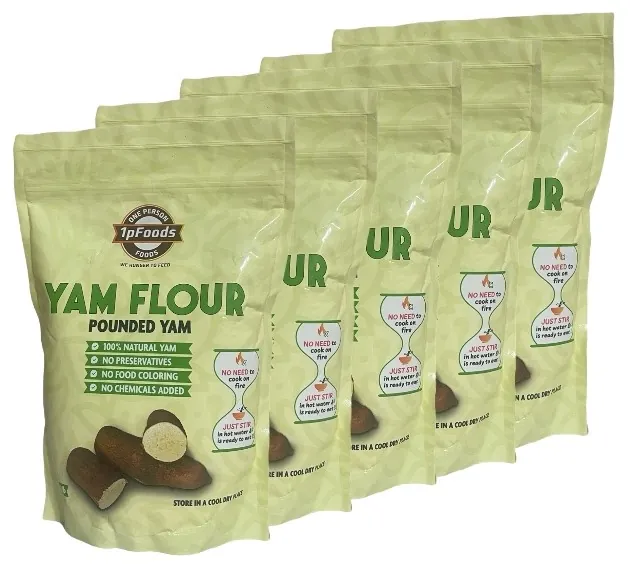
The 10 lb bag makes sense for bigger households and frequent cooks. It holds about 36 servings, so a family of four eating pounded yam twice a week (8 servings a week) will use it up in about four and a half weeks (36 divided by 8). The bag stays open for a good while, so this is where careful resealing, or decanting into a container, really counts. If you like the idea of buying in volume but keeping the flour in smaller sealed portions, the 5 x 2 lb bundle gives you five sealed bags to open one at a time.
| Pack | Servings | Storage advantage |
|---|---|---|
| 2 lb bag (900 g) | About 7 | Opened and finished quickly. Easy to keep sealed and to find a spot for. |
| 5 x 2 lb bundle | About 35 | Five separate sealed bags. Only one is ever open at a time. |
| 10 lb bag (4.5 kg) | About 36 | One bag to store, ideal for frequent cooks. Reseal carefully, or decant to a container. |
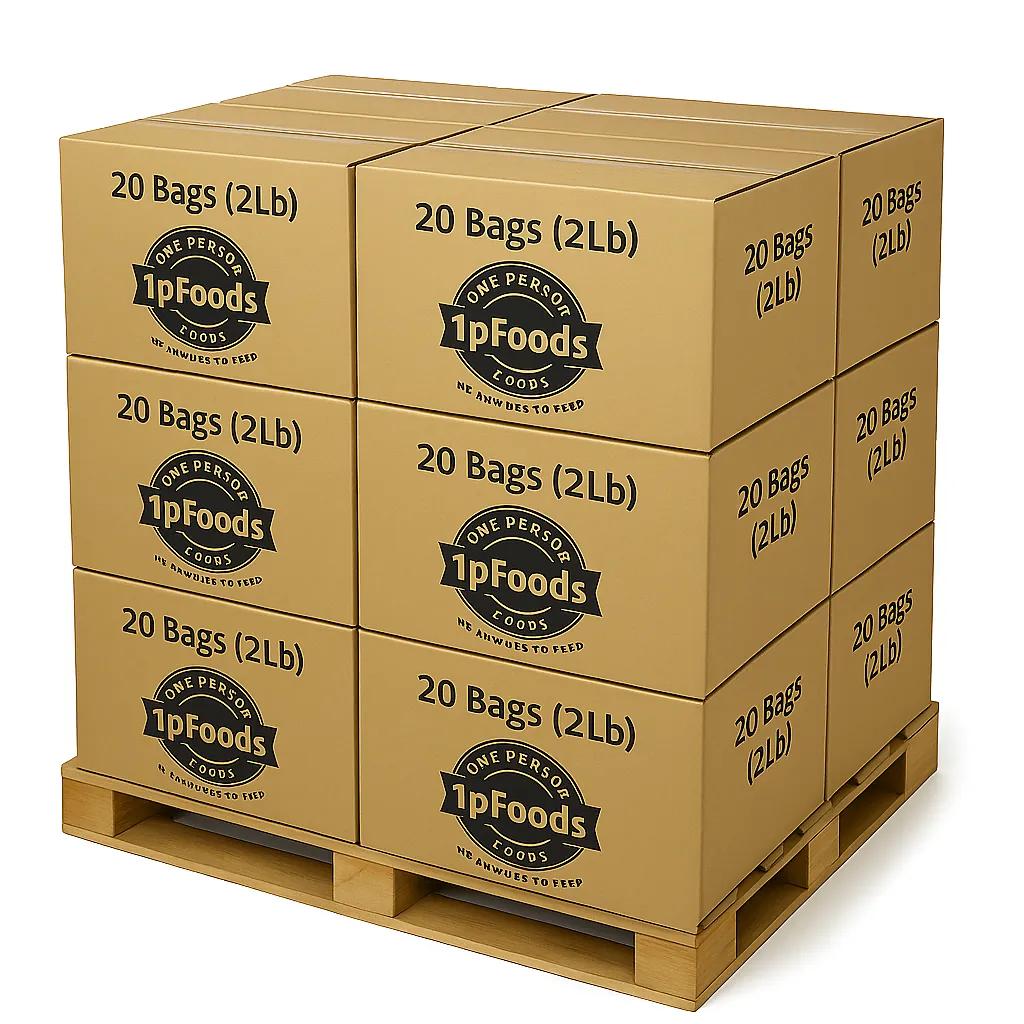
| 40 lb case (20 x 2 lb bags) | About 140 | For restaurants, caterers and stores. Twenty sealed bags in one case. Ask through the wholesale form. |
All of this is a question of matching the bag to your cooking rhythm. The full price list is on the pricing section, and shipping is free within the continental US on orders of five or more 2 lb bags, or on any 10 lb bag. Our servings guide shows how to work out the right size for your household.
Subscribing so you never store too much
If you would rather not think about stock at all, subscribe and save gives you 10% off, plus a reminder every 4 weeks so you can reorder in one click. You can skip or cancel at any time. It works nicely with good storage: you receive a new bag just as the old one is finishing, which means you never have a half-used bag sitting in the cupboard for months.
Cooked pounded yam: leftovers and what never goes back in the bag
Two different situations get mixed up here, so let us separate them.
Unused cooked dough never goes back in the bag
Once flour has been mixed with water or heated, it is a cooked food, not a dry flour. If you made more dough than you needed, or you scooped out more dry flour than you used, keep the two apart:
- Cooked dough, even a little, must never be returned to the bag or to a container of dry flour. A small damp piece in the flour would spread moisture through the rest.
- Dry flour that you measured out but did not use can safely go back into the bag only if it is completely dry and clean. If you are not sure, keep it aside for the next batch, or, better, measure only what you need.
Leftover cooked pounded yam
Pounded yam is best eaten straight after it is made, while it is hot, smooth and stretchy. It cooks in about 2 minutes, so making a fresh batch is rarely a hardship. If you do have leftovers:
- Let it cool briefly, then refrigerate it promptly in a covered container, within about two hours of cooking.
- Eat it soon rather than leaving it for days.
- Reheat it until it is steaming hot all the way through, with a splash of hot water and some stirring to loosen it.
- Expect the texture to be a little firmer than fresh. It will not be quite the same as straight from the pot.
Because it is so quick to make, most people find it easier to cook only what they will eat. If you regularly cook for a crowd, our how-to section is a good place to check the ratio before you start.
Storage mistakes to avoid
- Leaving the bag open beside the pot. Steam plus an open bag is the quickest route to clumps.
- Putting the flour in a cupboard above the stove. It seems convenient. It is the warmest, steamiest spot in the room.
- Using a wet cup or spoon. One damp scoop can start a hard lump that spreads.
- Rolling the bag without sealing it. A rolled bag looks closed but lets air move in and out.
- Topping up an old container with new flour. The old flour stays at the bottom, forgotten.
- Ignoring the date. The best-before date is printed on every bag for a reason.
- Storing it next to strong smells. Dry flours pick up aromas from open spices, dried fish and cleaning products.
- Buying a size that does not match your cooking. A bag that takes months to finish is opened again and again for months.
A quick storage checklist
Print this, or keep it in mind next time a delivery arrives:
- When the parcel arrives, check the best-before date on the bag and make sure the seal is intact.
- Choose a cool, dry cupboard away from the stove, sink, dishwasher and windows.
- Store unopened bags unopened, oldest at the front.
- Open one bag at a time and keep it resealed after every use.
- Use a dry cup or spoon, and measure away from the steam.
- Look and smell before you cook if the bag has been open a while.
- Keep cooked dough and damp things away from the dry flour, always.
- Match the pack to your rhythm: 2 lb for light cooking, the bundle or 10 lb for frequent cooks.
Follow these and the flour will do what it is supposed to do: turn into smooth, stretchy, white iyan in about 2 minutes, ready for egusi, efo riro, ogbono or whatever soup is on the stove.
Stock your cupboard with pounded yam flour
One ingredient, made from Benue yams, in resealable, moisture-resistant bags with the best-before date printed on every bag. Choose the size that fits how often you cook, and enjoy free shipping within the continental US on orders of five or more 2 lb bags or any 10 lb bag.
Frequently asked questions
How long does pounded yam flour last once the bag is opened?
There is no single answer, because it depends on how the bag is kept. Every bag has a best-before date printed on it, and an opened bag kept sealed in a cool, dry cupboard, scooped with a dry spoon, is in the best position to stay in good condition. Check the date, then look and smell before cooking.
Do I need to keep pounded yam flour in the refrigerator or freezer?
No, a cool, dry cupboard is what the flour needs for everyday use. A refrigerator is a damp place, and a cold bag taken into a warm kitchen can collect condensation, which is what you want to avoid. Keep the bag sealed, away from heat, steam and strong smells, and you will not need the fridge.
Can I pour the flour into a jar or airtight container?
Yes, many people prefer this. The container must be clean, completely dry and have a tight lid. Write the best-before date on the lid, or keep the bag corner with the date, and finish one container before refilling it, so older flour is always used first.
What if I see lumps in the flour?
Soft lumps that break into powder when pressed usually mean the flour has settled during shipping, and you can loosen it with a shake or a sieve. Hard clumps, a damp feel, a musty smell, mold or insects are different. In those cases do not use the flour, and replace the bag.
Can I put unused cooked pounded yam back in the bag?
No. Cooked dough has been mixed with water and heat, and even a small piece would bring moisture into the dry flour. Keep cooked dough and dry flour completely separate. Refrigerate leftover dough promptly in a covered container, and reheat it until steaming hot before eating.